Why Franchise Local SEO Needs an Owner in the Age of AI
A new franchise location is not fully onboarded just because the doors are open and the logo is on the building. Customers still need to find the right location, call the right number and trust that the information they see is current. That takes someone actively managing the location’s digital presence.
Google, Facebook, directories and AI-assisted discovery give people multiple ways to encounter your brand. When those sources disagree, your franchisee inherits the confusion. A corporate marketing team that leaves this work to chance is doing its locations a disservice.
Local SEO for franchises needs a repeatable process, a clear owner and ongoing maintenance. OpenAI’s new Business Hub adds another platform to that responsibility, with important eligibility and verification limits.
Local SEO starts with protecting the customer’s next step
Picture a customer finding your newest location after work. Google shows one closing time, Facebook shows another, and an older directory sends calls to a previous operator. Even a strong brand cannot make that experience reliable.
These are operational problems with marketing consequences. The wrong phone number can waste an inquiry. An outdated address can waste a trip. A location page that lists services the team does not offer creates an avoidable disappointment before the first conversation.
Google’s local ranking guidance says complete, accurate business information helps businesses appear for relevant searches. It identifies relevance, distance and prominence as core local ranking considerations. Accuracy supports that foundation; it does not override proximity or guarantee a position.
Our approach to franchise SEO services starts with making each location understandable and usable before piling on more campaigns.
Build one approved location record before you claim anything
Every new franchise should have a source of truth approved by corporate and confirmed by the local operator. Collect the actual public-facing business name, precise address or eligible service area, permanent local phone number, location website URL, opening date, hours, services and access contacts.
Then use that record to review profiles and listings. Do not let separate vendors, managers and franchisees invent different versions as they go. Record who approved the information and when it was last checked.
Name, address and phone number are often shortened to NAP. Consistency means those details identify the same real business. “Street” versus “St.” is less concerning than a wrong suite, disconnected number or old business identity. Respect each platform’s address and service-area rules rather than publishing a private address everywhere to force a match.
Claim and organize the profiles during onboarding
1. Google Business Profile
Search for an existing profile before creating a new one. Establish the correct ownership or management access, complete the verification required by Google, and review the map pin, categories, hours, phone and location-page link.
Use the real-world business name. Adding extra city names or services merely to chase keywords can conflict with Google’s business representation guidelines. A new franchise owner also does not automatically mean a new listing is needed. Review the actual business change and applicable rules first.
Make Google Business Profile management an assigned responsibility, including holiday hours, profile edits, photos and issue escalation after launch.
2. Facebook
Find the location’s existing Facebook Page and establish authorized access through the available Meta tools. Check for abandoned or duplicate Pages before starting another one. Confirm the location’s name, contact details, website, hours and customer-facing buttons.
Document which corporate and local team members manage it. Use individual access permissions rather than a shared personal password, and plan the handoff when a manager, franchisee or agency changes. A Page should remain manageable after the person who originally created it leaves.
3. ChatGPT Business Hub, where eligible
OpenAI introduced Businesses in ChatGPT in beta on November 10, 2026. Business Hub lets eligible businesses claim their presence, maintain information and access aggregated engagement insights.
For franchise onboarding, add an eligibility and listing check to your process. Do not promise that every location can immediately create its own ChatGPT property or that one corporate claim automatically covers every outlet.
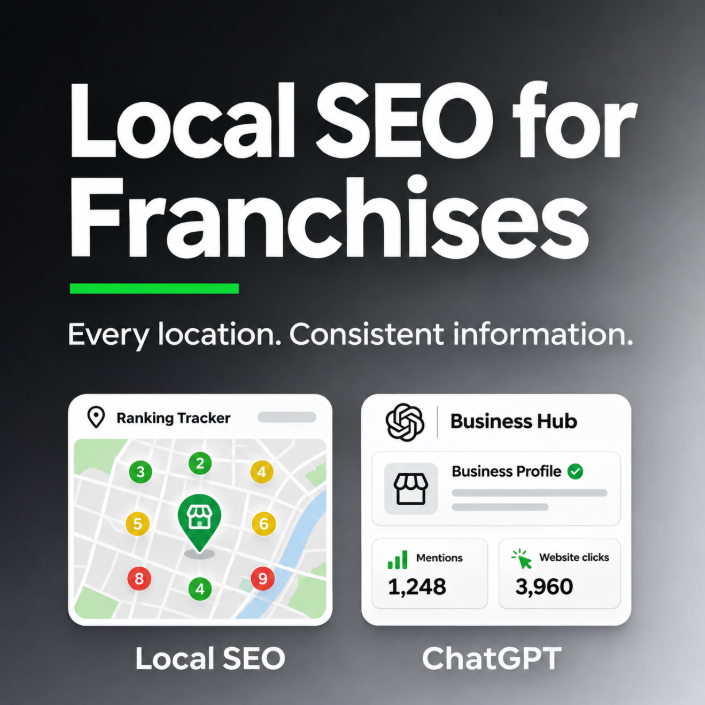
How claiming a business in ChatGPT works
According to OpenAI’s setup instructions, start in Business Hub in ChatGPT’s web sidebar. Search for the business, select the correct listing and follow an offered verification method, which may include phone, business email, website domain or Shopify. You must be an owner or authorized representative.
Claim approval and identity verification are separate steps. Persona approval is required to publish information changes, view insights and access eligible agent features. Keep the authorized owner involved in identity verification.
Current limitation: OpenAI says local stores and restaurants can currently claim only an existing U.S. listing. Eligible online businesses may have an option to add a business. Check the current instructions for each location rather than creating inaccurate substitutes.
After approval, keep available business details current. OpenAI reviews updates, and changes can take time to appear. ChatGPT may still use other sources. Eligible U.S. ecommerce and online service businesses can separately explore Business Agents; claiming a local profile does not establish agent eligibility.
Business Hub can also show aggregated mentions, website clicks and discovery topics, subject to activity thresholds. Those insights help you identify questions worth answering on your location pages. They are not access to customers’ private conversations.
As OpenAI explains in its Businesses in ChatGPT terms, claiming a listing does not give a business exclusive control over all displayed information. Treat it as another maintained information source, alongside your website and established profiles.
Directories should reinforce the same business identity
Once the core records are correct, review relevant directories and citation sources. Prioritize places customers actually use, industry directories and established local sources. More listings are not automatically better.
Check the name, address, phone, website destination and status of each listing. Flag duplicates and outdated records for correction through the publisher’s process. Keep a record of submitted changes and verify what actually becomes public.
Google explains that its business information comes from multiple sources, including websites, third parties and user contributions. Your submitted profile is one part of that environment. This is why franchise citation management should connect to the location page and profile program.
If you use call tracking, document which number appears where and preserve the underlying business number as appropriate to the platform. Confirm that every published number reaches the correct location. Measurement should help explain lead sources without leaving disconnected numbers behind when vendors change.
AI makes reliable information more useful, not less
Trust begins with verifiable facts and an experience that matches what was promised. A clean listing does not prove service quality, but contradictory contact details give people an immediate reason to hesitate.
Our practical recommendation is to make the business easier to identify across its own website and relevant third-party sources. That can reduce ambiguity for customers and systems gathering information. It is not a claim that AI platforms use a single “NAP trust score,” or that matching directories guarantees AI citations.
Combine accurate information with useful location-page content, genuine customer feedback and a clear next step. A page should explain what that location actually does, where it operates and how to reach its team.
A franchise onboarding checklist with real accountability
Confirm the facts: Have the local operator approve the location record before public updates begin.
Inventory access: Record existing Google and Facebook profiles, directory listings and the available ChatGPT listing or eligibility status.
Complete authorized claims: Track verification, approval and unresolved ownership issues separately from completed work.
Publish the location page: Align visible business details and applicable structured data with the approved record.
Correct priority citations: Fix material errors and follow up on pending publisher changes.
Test the customer journey: Call the numbers, open directions, check hours and submit a permitted test inquiry.
Assign ongoing ownership: Name who handles reviews, holiday hours, moves, closures and franchisee transitions.
Use a status such as “not started,” “pending verification,” “live and checked” or “blocked.” A claimed profile is not the same as an approved, accurate and tested profile.
Franchise support should continue after opening day
Locations move. Staff changes. Holiday hours arrive. Platforms introduce new features and verification requirements. Someone needs to catch those changes and carry them through the entire location record.
Neglecting this work leaves franchisees to solve preventable problems alone. Corporate can set standards while a dedicated manager coordinates execution, confirms local details and reports unresolved issues. That is a more useful service than simply saying the listings were “set up.”
Make this part of your new-location marketing process and your ongoing AI search visibility work. New platforms should strengthen the process, not distract from keeping the basics correct.
Give every franchise location a maintained foundation
If your network does not have a clear owner for profiles, citations and location information, start there. Audit a few locations, identify the gaps and establish a process you can repeat across the system.
Explore our corporate partnership model or compare franchise SEO packages and pricing to discuss a coordinated program for your locations.
Ready for the claiming steps? Follow our step-by-step guide to claiming a ChatGPT business profile for franchises, including corporate and franchisee responsibilities, verification, and blocked claims.
Training helps local teams execute the process consistently. Read our guide to video courses for franchisee onboarding for a practical way to reduce repeated meetings and teach the approved marketing workflow before launch.
Business Hub details checked November 12, 2026. Eligibility, verification and features may change; consult the linked OpenAI instructions before onboarding.
